We were pretty confident about our decision to launch into the upper reaches of the Tokositna at high water. We had had our helicopter pilot follow the entire route so we could scout for logjams, big rapids, and estimate the amount of floating debris. It looked pretty good.

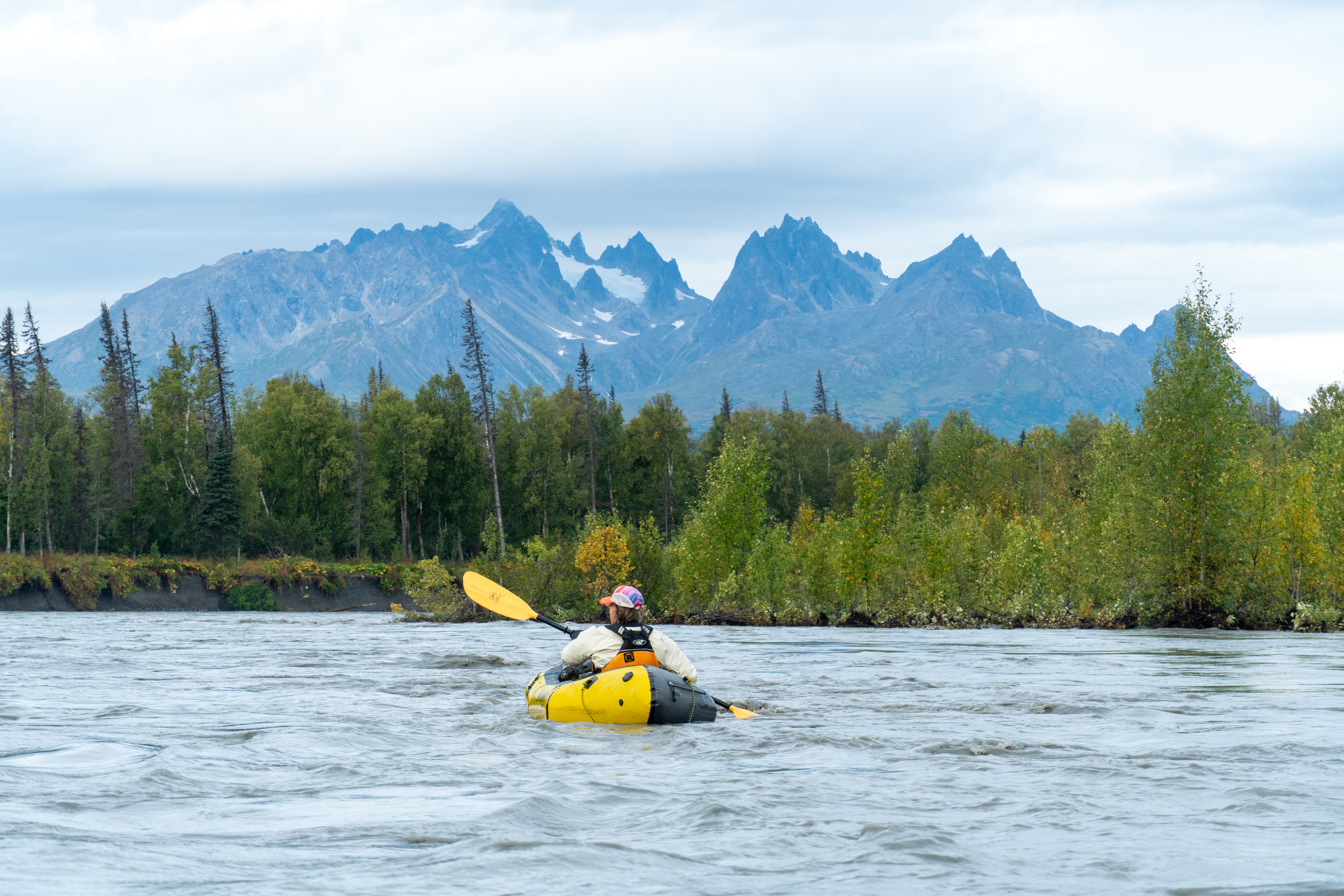
The challenge was stopping for the night on the Tokositna! The water was moving extremely fast (about 10 mph) and there were no gravel bars or even in many places a river bank. The water just ran up into bushes and trees, which, if it isn’t evident, are areas to be avoided.
We finally found a river bank about six inches high and jammed our camp into the bushes. It looked like other mammals were using that river bank area as a path (like bears) but what are we going to do? We had bear spray.

Then at 3:00 am there was a big splash, very close to us. What the hell? Then another. WTF? Then two more, just a few feet away, in a muddy river that is just ripping along. We used our flashlights to look around but saw nothing. Nothing to do really, but try to sleep with the comfort of knowing that grizzly bears are probably not going to stage a surprise attack from the river. It was hard to even imagine what could be out in a super-muddy flood stage river that was just ripping along. On a moonless night.
Turns out, I learned later, Beaver can be out in a flood stage river in the middle of the night. Apparently, people describe a beaver alarm not as a slap, but like “someone threw a large rock into a river”. Mystery solved. A beaver was upset we had camped there.
We had food for three nights, but the river was so fast we ended up spending just one night. Typically, it takes more than two days to paddle 60 miles! In fact, we didn’t paddle downstream much at all. We paddled every which way trying to stay in the main channel, which often wasn’t really evident until you are all but committed to a different channel.
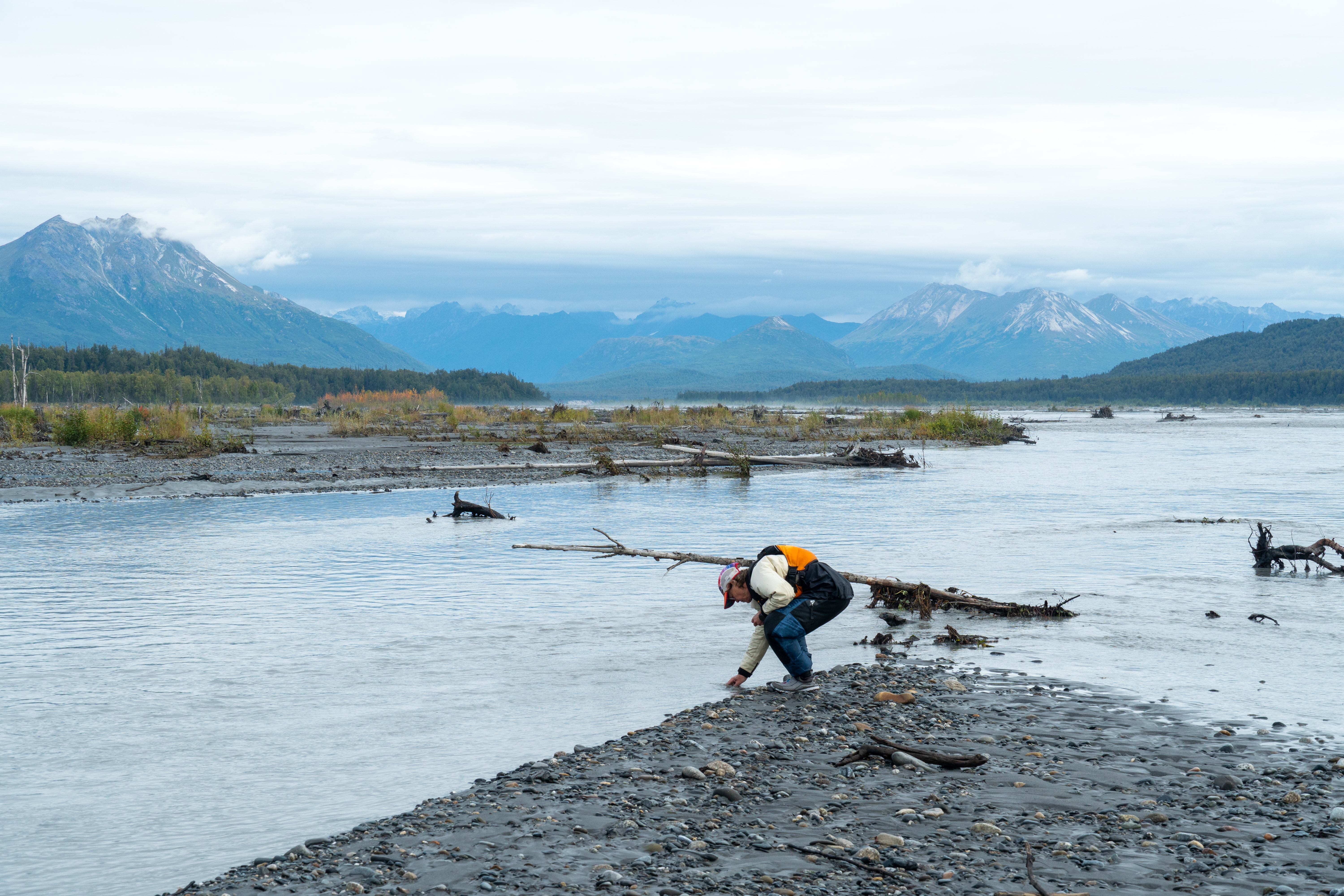
We reached the confluence of the Tokositna and Chulitna and noticed the water level had significantly decreased in the past two days, and gravel bars started to reappear in the river. That was good news if just for the fact we now had somewhere to stop and pee. Previously it was all but impossible to pull over somewhere.
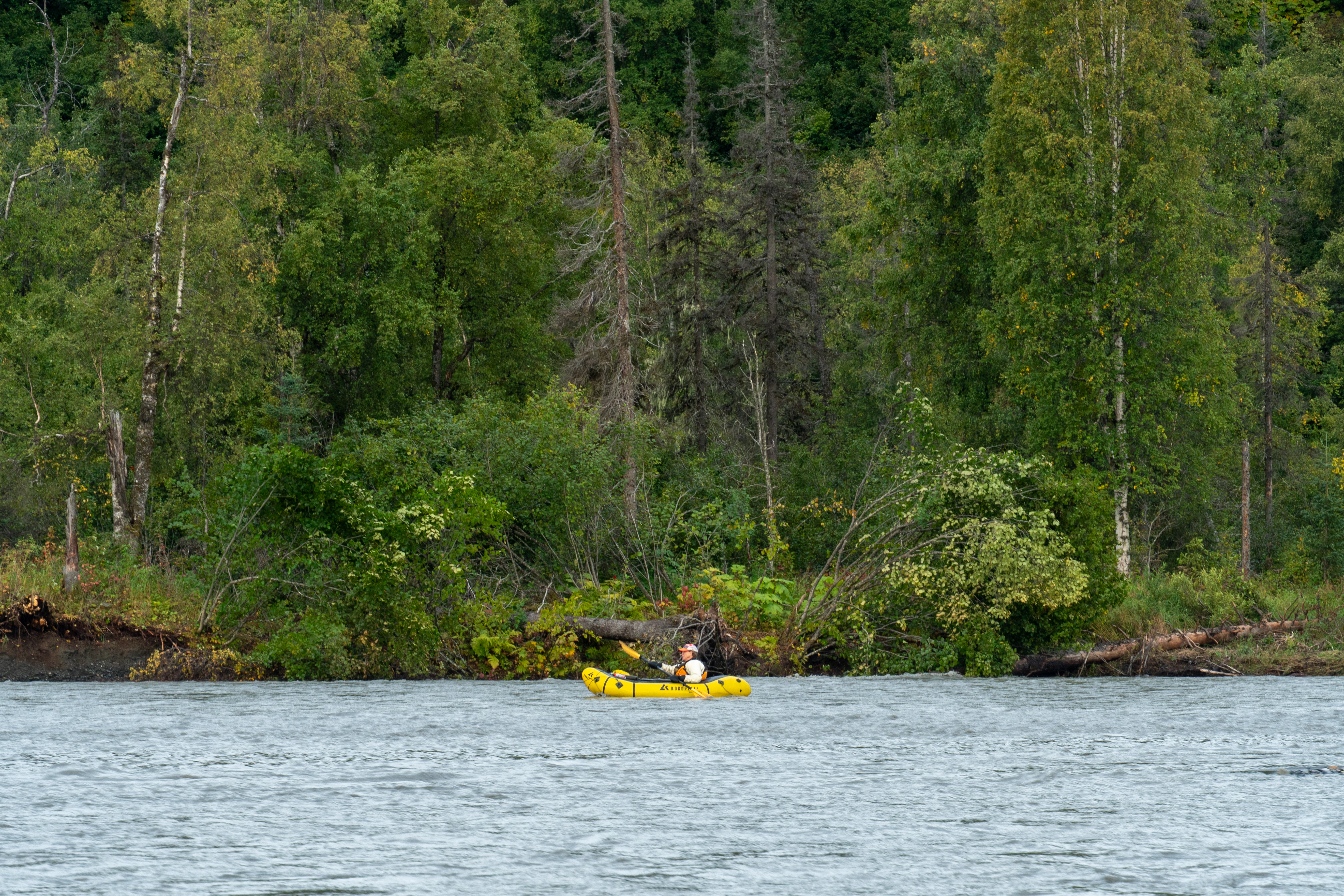
The last challenge was paddling hard to get into the correct channel and ferry across the river in order not to miss the town of Talkeetna completely. That would have sucked.
All in all pretty exciting, and the last adventure! The weather was getting cold, the leaves were turning color and it was time to start heading home to California.
 West Coast Flying Adventures