Most small planes need to land in Canada on the way to Alaska, even if for just one fuel stop (usually Prince George). Many like my 182 need multiple stops. You can overfly Canada on the coastal route, but not many pilots choose to go that way.
So, this means you need to go through Canadian customs to enter Canada, then within a day or two go through customs and border patrol (CBP) to re-enter the US into Alaska. And you need to do it right because screwing up the process can have consequences. I’ve been threatened with a fine of $5,000 (the hummus episode) and I’ve heard of pilots actually being fined $5,000).

Here is a summary of what you need to know:
Leaving the US
At least two hours before crossing the border into Canada, and I did it the day before, you must fill out and file the US eAPIS manifest form and make sure you get an approval back via email. They obviously do an automated background check because I did hear of one passenger rejected because of some sort of criminal charges he faced in the past. He couldn’t go. On this form you state where and when you will cross the border, so I can only imagine they watch you on radar cross the border at the place and time you say.
The other requirement to leave the US (and to enter Canada) is that you need to file a ICAO format flight plan, which the popular aviation app Foreflight does a great job of.
Arriving in Canada
When you land in Canada it must be at a port-of-entry. You do not need to create an additional flight plan in Canada for the segment you fly to the port of entry. Essentially, a Canadian flight plan is created for you, and you should cancel it when you land, although at a towered airport like Abbotsford or Vancouver, it will be cancelled for you. At a small airport like Eckhart International (a small grass strip!) you’ll need to radio or call flight service Nav Canada after landing to close your flight plane. For a list of airport ports-of-entry go the Canada Border Services Agency website.
Canadian customs for aircraft has always been very streamlined. You call the official CanPass number at least two hours ahead and they ask you a few questions. When you land at a port-of-entry you call again and they basically ask you if anything has changed. Then they give you a clearance number and wish you a nice trip. I’ve been through six times now and it has always been that easy, and I’ve only heard once of a customs official showing up in person to check papers. I also heard that person obviously wasn’t prepared so I guess custom officials wanted to show up and see what was up.
I even brought a shotgun once and since I had the required form filed out it wasn’t a problem. It turns out it WAS a problem getting back into the states later with the gun but that’s a different story. Note that handguns are prohibited.
You do not need a discrete transponder code like you do crossing the Mexican border.
I got chewed out going south because I landed short in Hope BC because of weather. I closed my flight plan by calling Canada flight service, NAV Canada. But even though you open one international flight plan, there are apparently two in the system – a Canada one and a US one. After 1.5 hours on the ground I called US Customs and they said flight service was looking for me since I didn’t close my flight plan (but I did!). Which didn’t sound quite right to me. Wouldn’t US flight service ask Canada flight service if they knew where I was? Because they did. Anyway, I got chewed out for that.
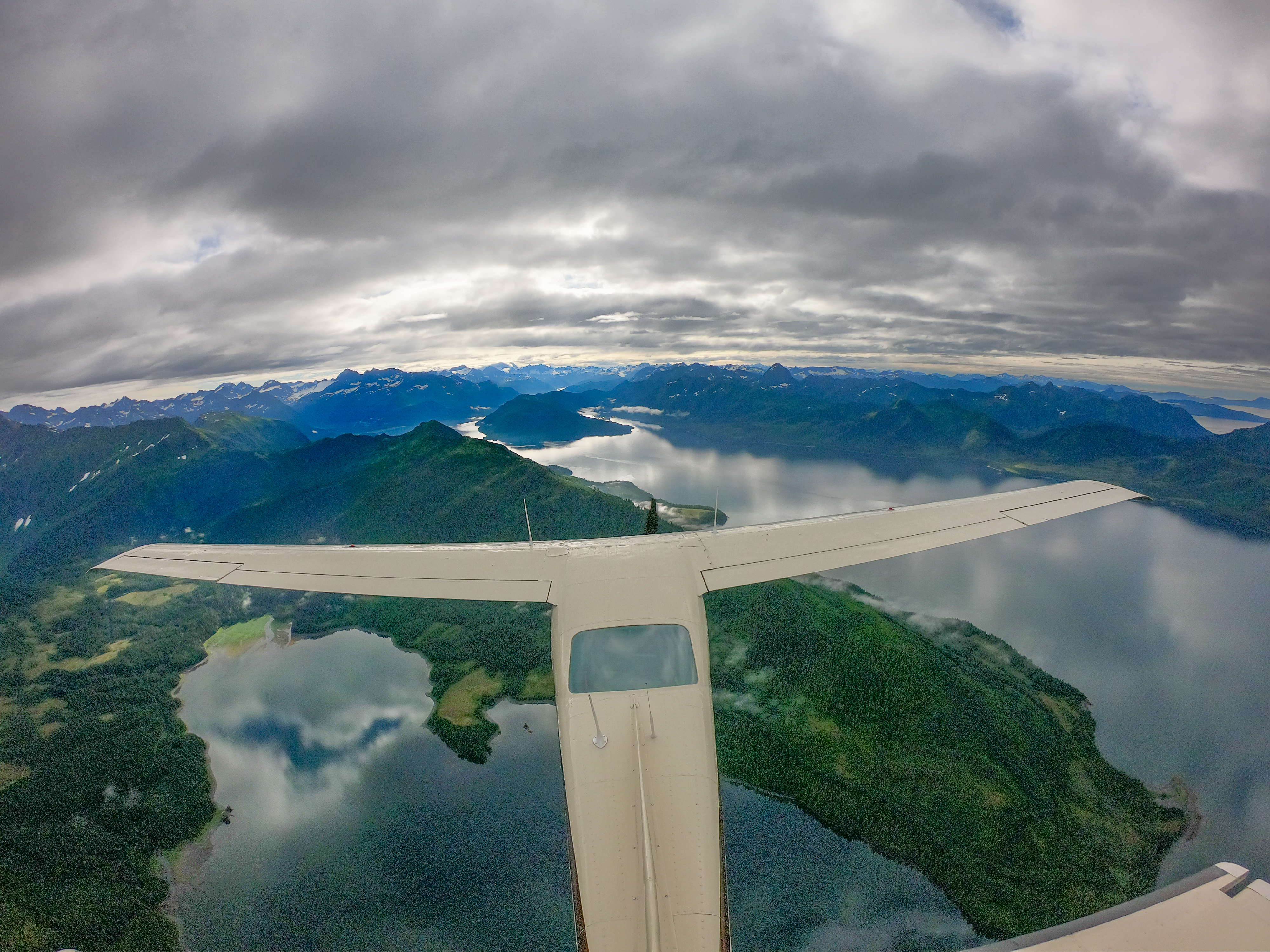
Leaving Canada
Just file a ICAO flight plan – and leave.
Entering the US
My general experience is that at small airports the CBP officials are friendly and at larger airports less so. Eckhart and Calixeco? Nice. Bellingham and Palm Beach? When entering from the Bahamas I was threatened with a $5,000 fine for not declaring an unopened package of hummus. When entering via Bellingham I was accused of being overweight even though they are not responsible for FAA violations. I was alone in my six place T210 so I was allowed 1,000 lbs of weight I could put in there. True, the plane was absolutely crammed with stuff, but all the sleeping bags and camping gear and climbing stuff didn’t add up to 1,000 lbs or even close. I was trying to explain that a 1,000 lbs is a LOT of stuff but it wasn’t working. However they did let me go after searching the plane.
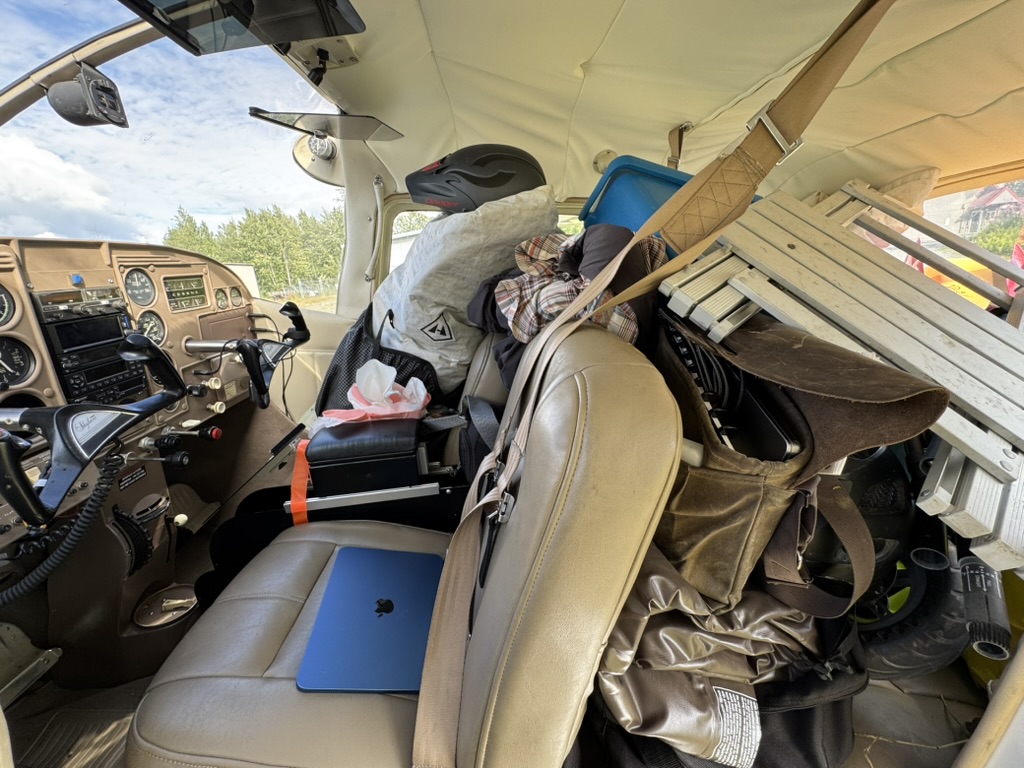
When entering the US you need to have filed a eAPIS form, an ICAO flight plan, and very important, you need to obtain a “permission to land” via a phone call to the CPB office at the border no sooner than 2 hours before you land in the US.
When heading north the FAA docs and Foreflight show that US Customs is available in Northway, but it’s not necessarily so. It is a 45 minute drive for the custom officers and they don’t always have the staffing to do the drive. Or they just don’t want to. Hard to tell.
The last two times it was the same. My cousin Fred also had the same experience. I called the day before and they said Northway may not be possible. They offered customs in Anchorage or Fairbanks with a waiver to get fuel at TOK. I said I wasn’t going there. They asked if I possibly could go there. Uh, rather not, I’m going to McCarthy. They said to call in the am and they would see how the staffing looked. The next morning, after giving me grief for not noticing the time change and calling 30 minutes early, they did batch 3 parties together for a mass arrival into Northway. So in the end they did it (both times). The only thing you can do is be cordial and hope it goes your way. Or go to Anchorage or Fairbanks, but really you should be going to McCarthy.
Kinda funny that once I was on the ground at Northway, both times they didn’t look at any of my paperwork (well, except my passport) or my plane. That’s a long drive to look at a passport. Seems like they should do it like Canada with a phone call. I’m afraid with budget cuts they’ll cut out Northway completely and that would be a pain.
What I did, and it is highly recommended, is to put together a folder with copies of all your required docs, and I make an offer that they can take anything they want, and I also offer to show them originals if needed. Here’s what I have:
- Passport
- Registration (current one)
- Weight and balance
- Approved eAPIS filing, or if not able to print it, available on my iphone.
- Airworthiness Certificate
- Insurance summary
- Pilot’s license
- Current medical (Canada does not recognize BasicMed and probably not Mosaic either)
- No, I don’t have a radio station license
- I guess you could have your flight plan, but I don’t. I have it on Foreflight.
Now that I’ve written it out it sounds like a lot, but it really isn’t too bad once you get into it. The eAPIS system is a little daunting when you first use it, but after once or twice it’s easy to use an old filing and just update it.

 West Coast Flying Adventures